July 7, 2026
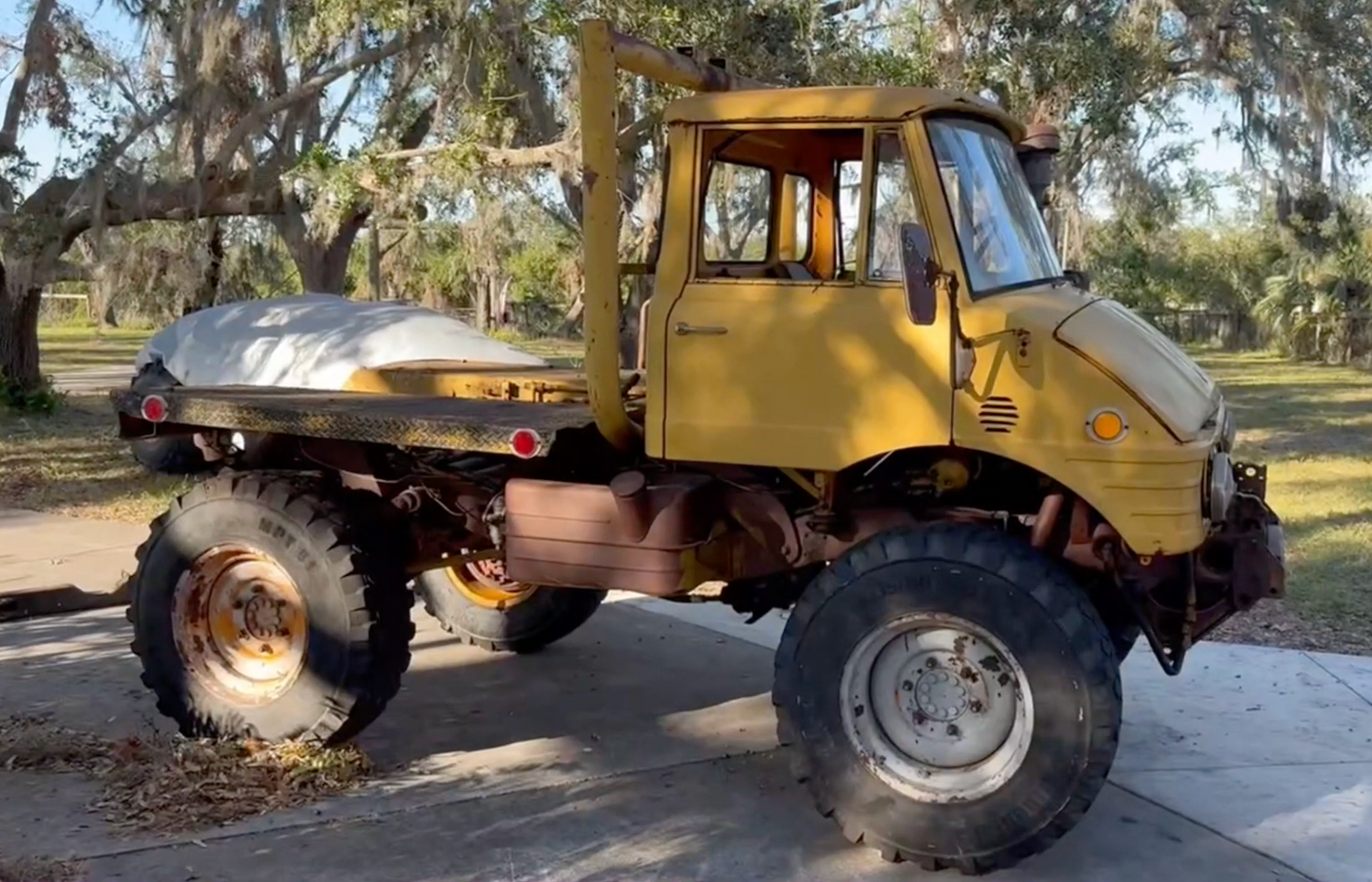
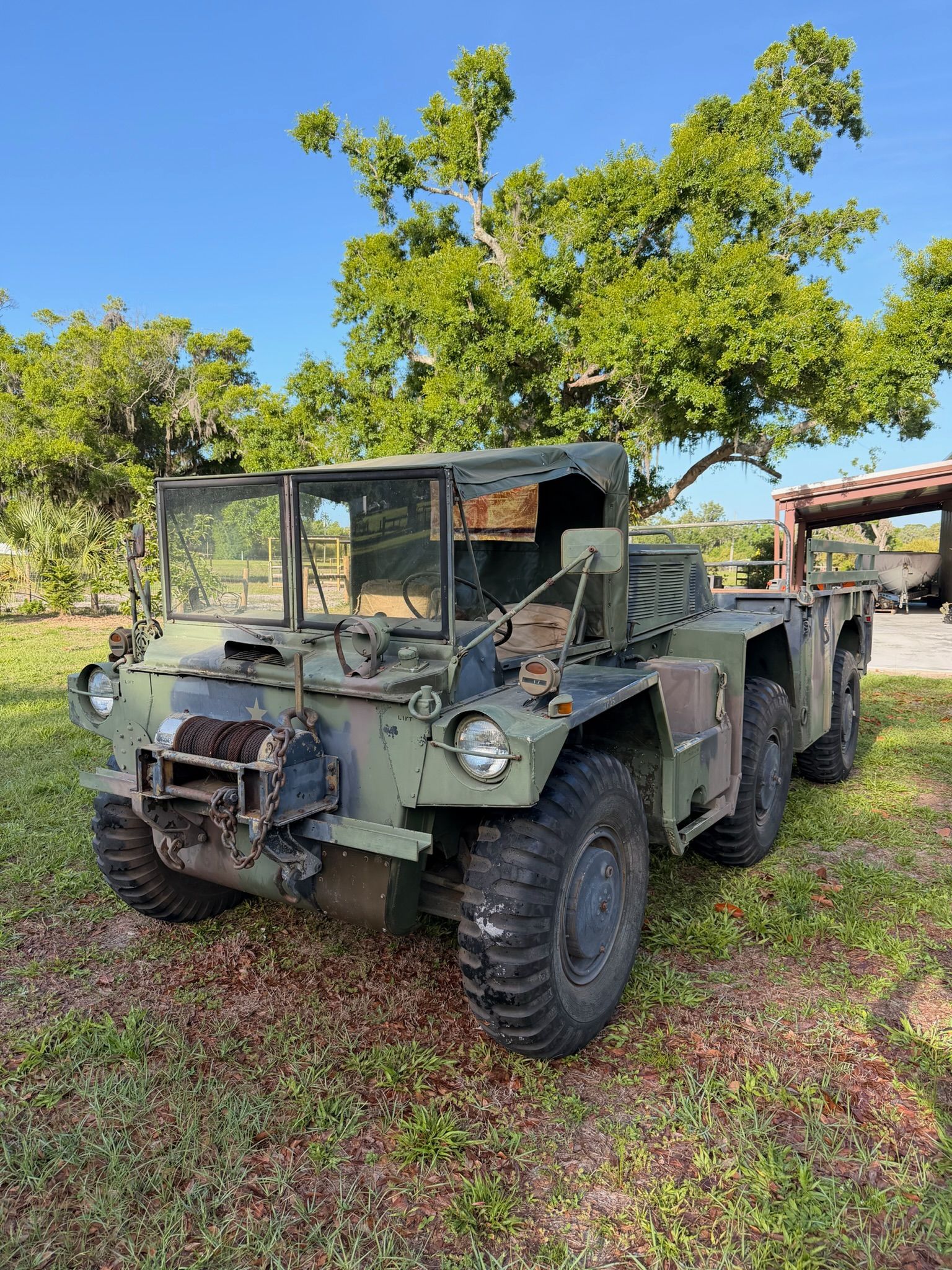
The Mercedes-Benz Unimog: The Ranch Vehicle That Looks Like It Can Drive Over Anything Some vehicles show up and immediately make you wonder one thing: “What exactly is that thing built for?” That is the Mercedes-Benz Unimog. It is not a regular truck. It is not a tractor. It is not just an off-road vehicle. It is somewhere in the middle of all of it, which is exactly what makes it so interesting. At Hot Rod Donkey Ranch, we have a soft spot for vehicles that don’t fit neatly into one category. Race cars made street legal. Military machines with wild backstories. Small motorcycles that taught generations how to ride. And then there is the Unimog, a Mercedes-Benz workhorse that looks like it was designed by someone who had zero interest in pavement being required. Our 1970 Mercedes-Benz Unimog fits the ranch perfectly because it is tough, unusual, mechanical, and built with a purpose. And...... it looks like it could climb out of a ditch, haul a load, and still make Pancho and Cisco stop what they’re doing to inspect it. What Is a Unimog? The word “Unimog” comes from the German phrase Universal-Motor-Gerät , which roughly means universal motorized implement or universal motor device. That name tells you almost everything you need to know. The Unimog was designed to be more than transportation. It was designed to work. Originally, the Unimog was created as a highly versatile agricultural machine after World War II. It could be used in fields, forests, farms, construction areas, military applications, and places where a normal truck would simply give up. That is the whole personality of the Unimog. It does not care if the road ends. A Little History on the Mercedes-Benz Unimog The first series-produced Unimog was delivered in 1949 by general distributor Kloz in Fellbach, Germany, after production began at Gebrüder Boehringer in Göppingen. Daimler-Benz later took over Unimog production in 1951, and the vehicle became part of the Mercedes-Benz family. By 1953, the Mercedes-Benz star appeared on the Unimog, replacing the original ox-head style emblem. An enclosed cab also became available, helping turn the Unimog into an all-weather work vehicle instead of just a field machine. By the time our 1970 Unimog came along, the vehicle had already earned a reputation for being one of the most capable and flexible machines in the world. Mercedes-Benz continued developing lighter and heavier-duty Unimog model series during the late 1960s and early 1970s, building on its reputation as a true all-purpose workhorse. That is why Unimogs have been used for so many different jobs over the years, including agriculture, utility work, military service, snow removal, forestry, rescue work, overlanding, and off-road exploration. Basically, if there is a difficult job in a difficult place, somebody has probably tried to solve it with a Unimog. Why the Unimog Looks So Different The Unimog has a look that is impossible to mistake for anything else. High ground clearance. Short overhangs. Big tires. Compact cab. Purpose-built stance. It does not look like it was styled to be pretty. It looks like it was engineered to survive. One of the biggest reasons the Unimog is so capable off-road is its use of portal axles. Portal axles allow the axle housing to sit higher than the wheel centerline, creating more ground clearance underneath the vehicle. Pair that with four-wheel drive and differential locks, and you have a machine built to crawl through terrain that would stop most trucks. That is what makes the Unimog so fascinating. It is not pretending to be rugged. It actually is. Not Fast. Not Fancy. Not Fragile. A Unimog is not the vehicle you buy because you want luxury. It is not built to glide silently down the highway. It is not trying to compete with a modern pickup. It is not concerned with cupholders, touchscreen menus, or leather-trimmed convenience. The Unimog is old-school mechanical confidence. Everything about it feels purposeful. The height, the gearing, the tires, the cab, the way it sits. It has the kind of presence that makes people stop and ask questions. And that is exactly the kind of vehicle we love at the ranch. Because around here, the weird ones usually have the best stories. Why a Unimog Belongs at Hot Rod Donkey Ranch There are vehicles you collect because they are beautiful. There are vehicles you build because they are fast. And then there are vehicles like the Unimog, which you keep because it feels like it could be useful in an apocalypse. It fits the Hot Rod Donkey Ranch vibe because it is different in all the right ways. It is part farm equipment, part off-road truck, part military-style workhorse, and part conversation starter. It feels just as at home near the barn as it would on a mountain trail or crawling through mud somewhere it probably should not be. At the ranch, we appreciate machines with personality. The Unimog has plenty. It is not polished in the traditional sense. It is not delicate. It is not trying to impress anyone. That is what makes it cool. The Beauty of Purpose-Built Machines Modern vehicles are often built to do a little bit of everything while looking clean and comfortable. The Unimog came from a different way of thinking. It was built to solve real problems. Need to work in a field? Need to pull equipment? Need to climb over rough terrain? Need to drive where a normal truck cannot? Need something that can be adapted for different jobs? That is what the Unimog was made for. And that is why it has lasted so long. A lot of vehicles come and go because they were built around trends. The Unimog has stuck around because usefulness never goes out of style. Why People Still Love the Unimog The Unimog has a loyal following because it represents something rare. It is honest. It does not look tough for marketing. It looks tough because it had to be. It was designed for farmers, workers, militaries, utility crews, and people who needed something more capable than a normal truck. Today, collectors and enthusiasts love Unimogs because they are mechanical, unusual, and almost endlessly adaptable. Some people restore them. Some turn them into overland rigs. Some use them as working farm trucks. Some just love having one because nothing else feels quite like it. And when you see one in person, you get it. A Ranch Favorite for a Reason The 1970 Mercedes-Benz Unimog is not the flashiest vehicle at Hot Rod Donkey Ranch. It is not the sleekest. It is not the fastest. It is probably not the easiest thing to park. But it might be one of the most interesting. It has history. It has capability. It has that oddball charm we love. And it carries itself like a machine that has nothing to prove. That is what makes it special. Some vehicles are built for speed. Some are built for comfort. Some are built to look good. The Unimog was built to go to work, go off-road, and keep going. And around here, that earns a lot of respect. Final Thoughts from the Ranch The Mercedes-Benz Unimog is one of those vehicles that reminds us why old machines are worth preserving. It is simple in some ways, wildly capable in others, and completely different from almost everything else on the road. At Hot Rod Donkey Ranch, that is exactly the kind of vehicle that belongs here. A little strange. A little rugged. A whole lot of personality. And definitely donkey-approved.